
The Unclosed Door · RFK series
The Hypno-Programmed Assassin – Reinforcing the Sirhan Protocol in Popular Culture and Intelligence Warfare
Part XVII of The Unclosed Door
1. Introduction: Programming as Praxis and Myth
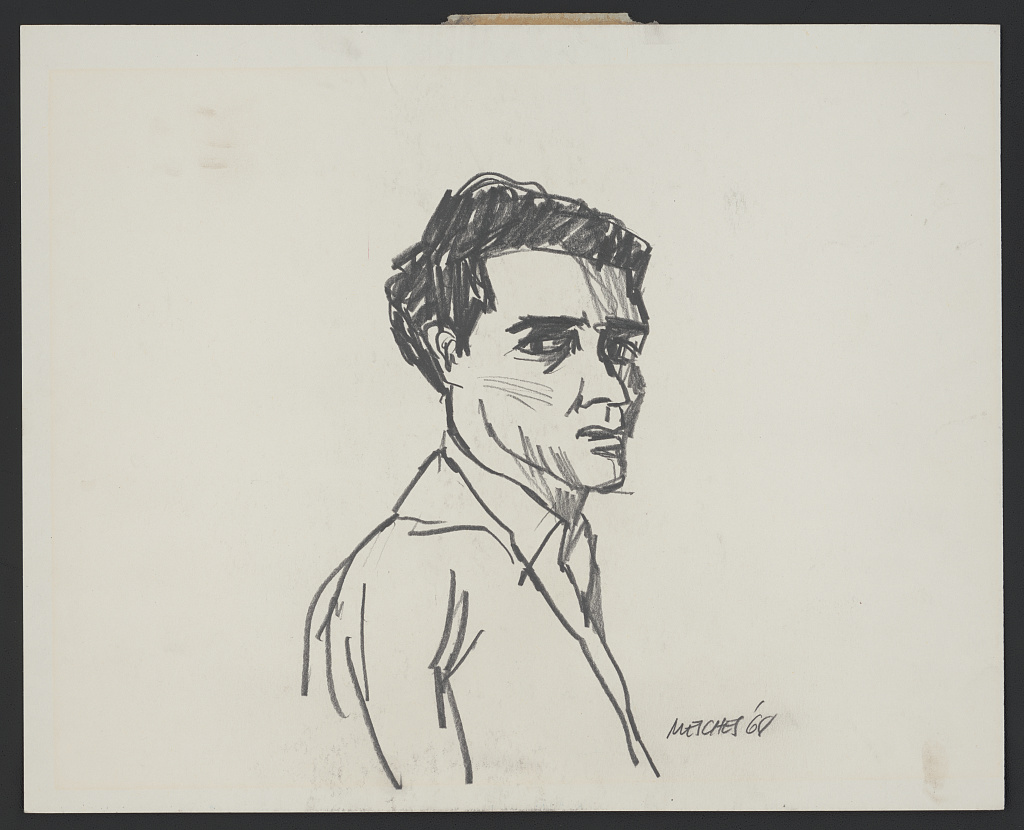
Sirhan Sirhan didn’t act alone.
This now goes beyond reasonable doubt—from the ballistic inconsistencies, eyewitness contradictions, and forensic impossibilities. But there is another “alone” more profound than operational solitude: the psychological isolation of a man used as a puppet, unaware of his strings.
The idea of a hypno-programmed assassin seems implausible at first. That is the design. By burying it in fiction, the truth becomes inaccessible.
The genius of American intelligence culture is not in hiding facts, but in subsuming them into archetype. When you say “Manchurian Candidate,” you are not speaking of trauma science. You are speaking of cinema. And in that sleight of hand, a real Sirhan becomes a character in a genre, not a victim of neuroweaponized control.
This is not speculation. This is the documented result of overlapping MKUltra programs, psychological operations doctrine, and media-political feedback loops that define what is admissible as memory—and what is dismissed as madness.
2. MKUltra’s Operational Goals: The Mind as Weapon System
Declassified CIA documents from MKUltra subprojects reveal goals far more explicit than has been publicly admitted:
- Creation of “controlled agents” who could execute a mission and forget it.
- Use of hypnosis, amnesiacs, and trauma bonding to create alternate personalities.
- Implantation of post-hypnotic triggers activated by coded stimuli (words, sounds, gestures).
- Induction of altered states through drugs (LSD, scopolamine), electroshock, and sensory deprivation.
- Use of female operatives as sexual and emotional anchors during programming.
Subproject 130 (Behavioral Conditioning via Hypnotic Induction), led by Dr. Martin Orne, noted:
“Subjects under controlled dissociative conditions could be induced to perform acts—including those of extreme moral violation—without conscious awareness.”
Sirhan Sirhan, under hypnosis by multiple defense psychiatrists, was able to:
- Write involuntarily.
- Mimic the shooting.
- Show no emotional reaction.
- Forget everything.
If this were an experiment, he would be textbook success.
3. Sirhan’s Behavioral Conditioning: Echoes of Protocol
Sirhan displayed multiple markers consistent with MKUltra-trained subjects:
- Trigger association: multiple witnesses describe a woman in a polka-dot dress guiding or cueing him.
- Trance state: He appeared robotic and dissociated.
- Post-act amnesia: Sirhan remembers approaching Kennedy, then nothing.
- Compartmentalized affect: He showed no remorse or panic, consistent with “host” and “alter” separation.
Dr. Daniel Brown (Harvard) and Dr. Alan Scheflin (Santa Clara University), leading experts in hypnosis and coercion, concluded that Sirhan exhibited:
“Highly specific markers of coerced dissociative programming.”
These are not “fringe” claims. They are derived from standard clinical assessments, aligned with documented CIA protocols.
And yet… not a single court admitted this into evidence.
Why?
Because a programmed assassin, once acknowledged, turns a state crime into a revolution of perception.
4. Manchurian Precedents: From Truth to Trope
The term “Manchurian Candidate” originates from Richard Condon’s 1959 novel and John Frankenheimer’s 1962 film.
Plot:
- A U.S. soldier is captured in Korea.
- Brainwashed by communists using hypnosis.
- Returns to the U.S. as a mind-controlled assassin.
While fictional, the plot closely resembles MKUltra’s actual objectives, developed years prior:
- Project ARTICHOKE (1949): early precursor to MKUltra, exploring hypnosis and amnesia for “special operations.”
- Dr. George Estabrooks (1942): claimed to have successfully programmed assassins using “split alter personalities.”
Condon’s book was fictional disclosure—a sanitized narrative of real techniques, wrapped in Cold War exoticism.
And it worked.
By rendering the hypno-assassin as fantasy, the public was trained to laugh off reality.
5. Cinema as Covert Psy-Op: Aestheticizing the Impossible
Hollywood didn’t merely reflect these ideas. It amplified and confused them:
- The Parallax View (1974): A journalist uncovers a corporate conspiracy that recruits assassins via psychological conditioning. The plot is discarded as “conspiracy theory” even as it models real programs.
- Taxi Driver (1976): A traumatized veteran becomes a vigilante and attempted assassin, partly modeled on Sirhan Sirhan and Arthur Bremer.
- The Bourne Identity series: A CIA assassin suffers amnesia, slowly uncovers his programming. Fictional—but narratively aligned with real trauma-based conditioning profiles.
In each case, the mechanism is shown—but depoliticized:
- No mention of MKUltra.
- No naming of CIA behavioral science divisions.
- No link to real assassinations.
This is the function of cultural laundering.
It exposes just enough to seem edgy, while reinforcing the idea that such scenarios belong only in fiction.
And so Sirhan becomes an outdated trope, not a living testimony.
6. Reinforcing the Lie: The Role of News and Pop Psychology
While Hollywood aestheticized mind control, mainstream psychology denied it.
After the Church Committee hearings (1975–76), the APA and mainstream academic circles:
- Downplayed MKUltra’s scope.
- Framed reports of programming as “mass hysteria” or “false memory.”
- Shifted toward pharmacological psychiatry, reducing trauma research.
Simultaneously, CIA-friendly psychologists like Dr. Louis Jolyon West, who had himself conducted MKUltra experiments at UCLA and Oklahoma, went on to become media experts on “lone gunmen.”
West:
- Examined Jack Ruby and declared him paranoid.
- Consulted on Sirhan’s case and minimized programming possibility.
- Worked on public mental health programs with embedded surveillance agendas.
His role was to translate behavioral control into pathology—so that no one would ask who was controlling the behaviors.
This synthesis of pop psychology and narrative suppression ensured that no serious reappraisal of Sirhan’s condition would enter popular consciousness.
7. The Real Manchurian Candidate: Sirhan’s Silence as Proof
Sirhan has, for over 50 years:
- Maintained he does not remember the shooting.
- Expressed remorse for what he is told he did.
- Shown dissociative symptoms consistent with trauma conditioning.
Every parole hearing reaffirms this.
But instead of sparking inquiry, this amnesia is interpreted as lack of remorse.
This inversion is core to programming:
- The subject is made to forget.
- The forgetfulness is then used to prove guilt.
This is the death spiral of dissociation in state violence.
The better the programming, the more reliable the patsy.
Sirhan’s case is not a failure of justice.
It is the perfection of MKUltra’s design.
8. Dramatic Construction: The Sirhan Sequence
Set: A dark room. Sirhan sits in a chair. Electrodes on his head. A man in a white coat reads a phrase: “June 5.”
Sirhan begins to write. His hand trembles, then moves without resistance.
“RFK must die… RFK must die…”
Act II: Sirhan in a prison cell. A parole board sits before him.
Chairman: “Do you accept responsibility?”
Sirhan: “I wish I could. I don’t remember.”
Chairman: “Then you’re not rehabilitated.”
Act III: A projection behind the stage. Declassified CIA memo:
“We now have the ability to control behavior at will. The subject is unaware. The assassin believes he acted freely.”
Curtain falls.
9. The Enduring Threat of the Programmed Assassin
The Sirhan protocol did not die in 1968.
Its logic continues:
- Drone operators now kill from afar, conditioned to dehumanize.
- Algorithmic behavioral nudging on social media produces action without awareness.
- Neuro-modulation research at DARPA aims to influence soldier decision-making in real time.
In each case, the line between thought and instruction, belief and insertion, becomes less visible.
Sirhan is not a relic.
He is a prototype.
And the ultimate horror is not that we created programmed assassins.
It is that we may now be living in a programmed society.
10. Conclusion: Sirhan as Metaphor, Warning, and Testimony
Sirhan Sirhan, the man, sits in a California prison—diminished, forgotten, misremembered.
Sirhan Sirhan, the program, lives on—in statecraft, in popular culture, in the psychological frameworks we use to explain away contradiction.
The real Manchurian Candidate was never about hypnotism alone.
It was about creating a human who could kill, forget, and be believed—by a public already conditioned to mistake myth for history, and trauma for guilt.
Until we listen to what Sirhan has been trying to tell us—not in words, but in silence—we will remain trapped in the same loop:
- A leader rises.
- A bullet falls.
- A lone gunman is blamed.
- A nation forgets.
The program runs.
And it will continue running until someone—perhaps you—asks not, “Did he do it?”
But: “Who told him to?”
Source anchor appendix (Part XVII): Manchurian-candidate motif in the record → {NR-C11-¶011}; Diamond/Spiegel clinical base → {MD-C12} · {WB-C15-¶032} · {WB-C15-¶070}
More from the Chomsky Analytical Desk
- The Unclosed Door — Visual Index 23 November 2026
- The World RFK Inherited 22 November 2026
- Robert Kennedy’s Political Awakening 22 November 2026
- 1962 – RFK, AIPAC, and the Foreign Agent That Never Was 22 November 2026